Robotic Unpacking Machine (Robotic Depalletizer)
Message
Description
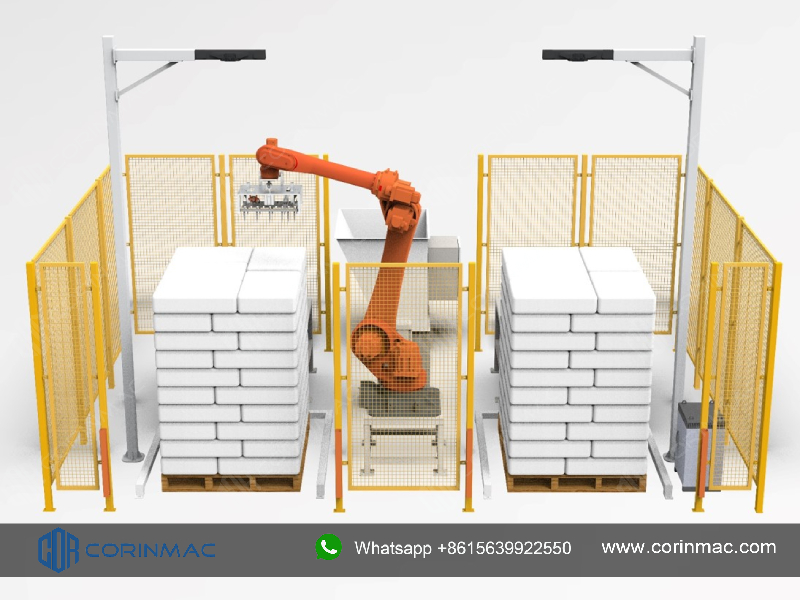
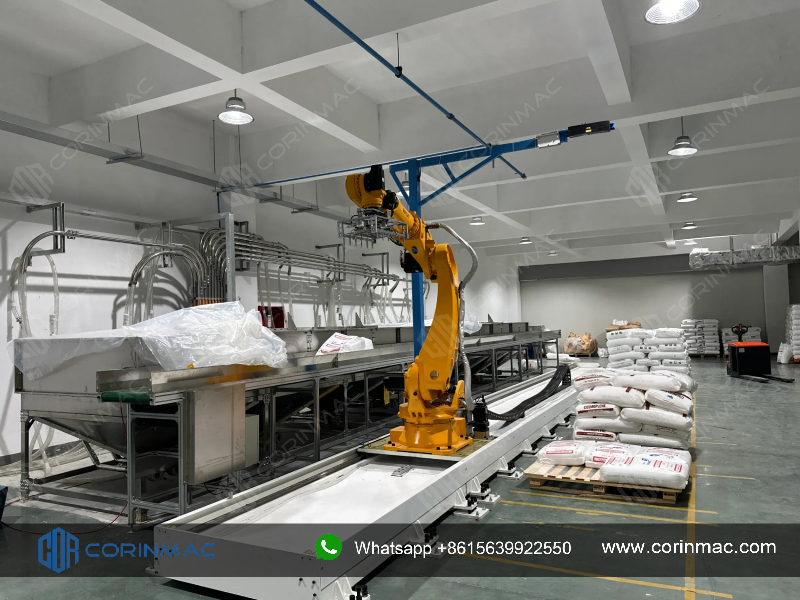
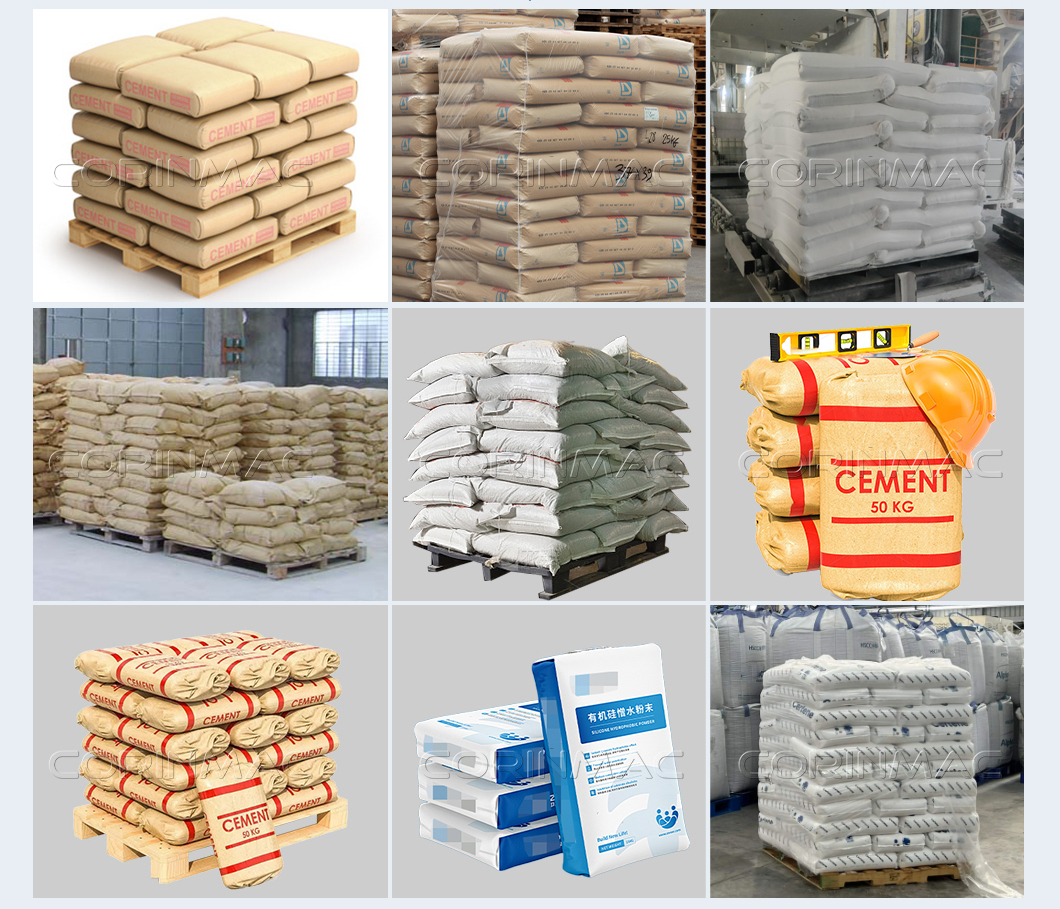
Automatic bag unpacking robot (robotic depalletizer) is an intelligent device that integrates automatic unpacking, bag breaking, feeding, and dust removal. It is widely used in industries such as chemical, food, pharmaceutical, and building materials, etc. Especially suitable for the automated processing of small bag powder materials weighing less than 25kg.
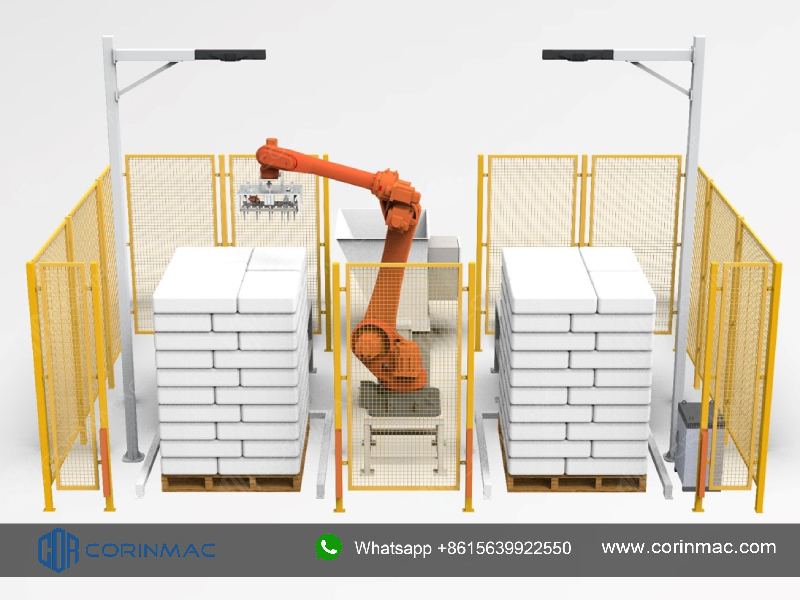
robotic depalletizing systems
Structure and Components
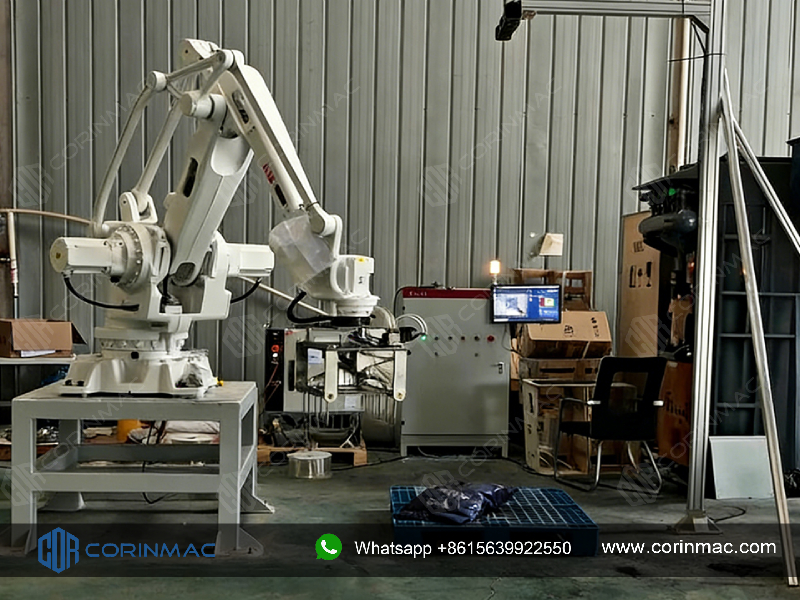
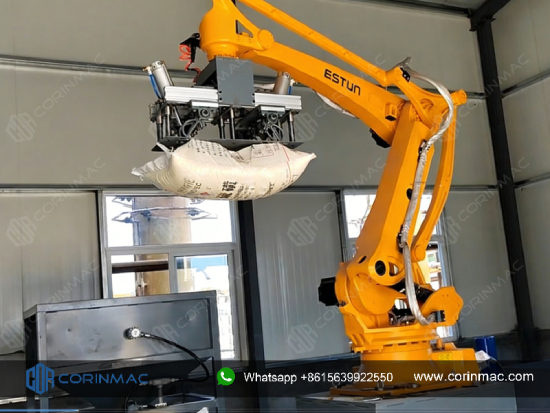
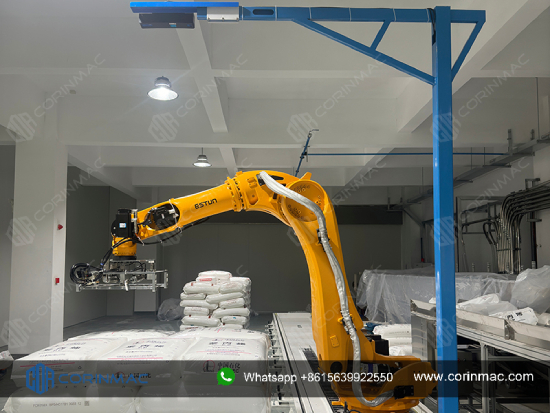
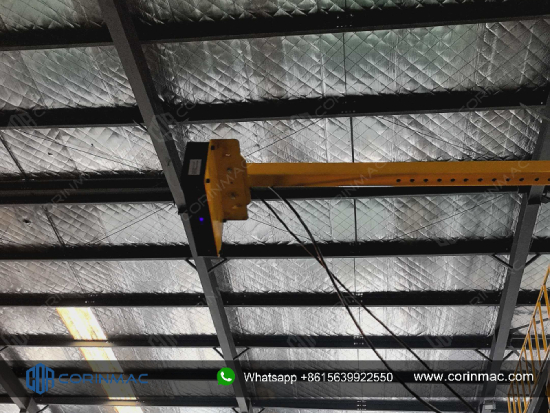
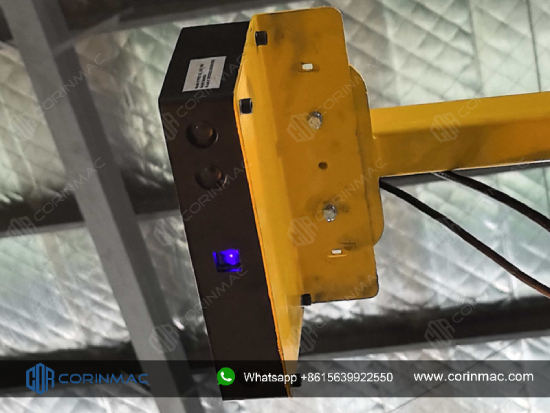
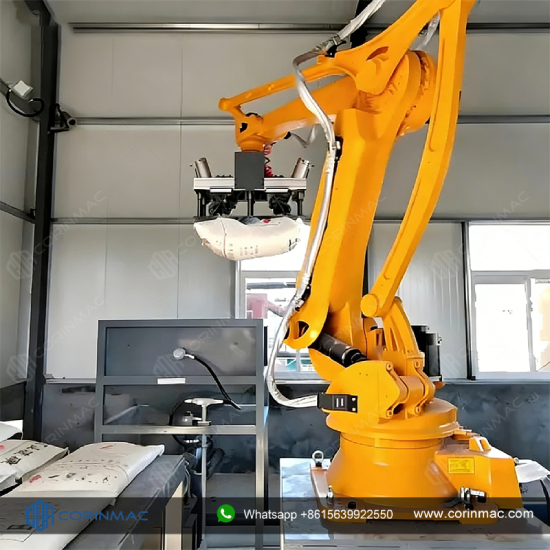
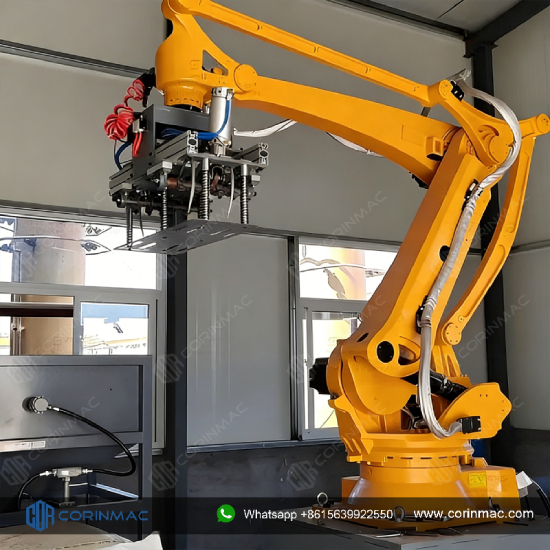
Depalletizing Robot: Equipped with a 3D vision system, it accurately identifies the position and posture of the palletized bags, automatically grabs the bags, and transports them to the bag-breaking station.
Bag-Breaking Device: Adopt high-speed rotating blades or pneumatic cutters to quickly slit the packaging bags, preventing material residue.
Material Separation System: Separates materials from packaging bags using a drum screen or vibrating screen; residual bags are automatically discharged and recycled.
Feeding and Conveying System: After unpacking, materials are conveyed to downstream equipment via a closed screw conveyor, tubular chain conveyor, or pneumatic conveying system.
Dust Removal System: Utilizes negative pressure dust extraction throughout the process to prevent dust leakage and meet cleanroom environmental protection requirements.
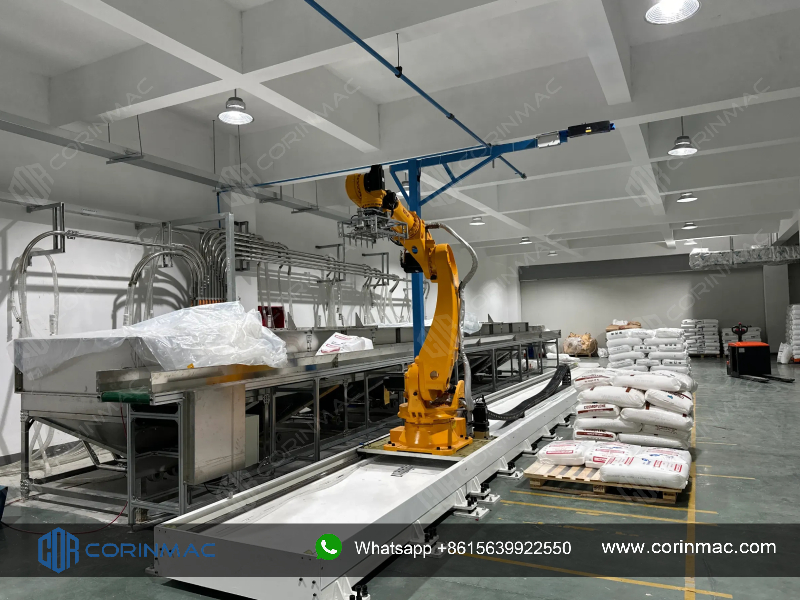
robot depalletizer
Famous brand ABB robot
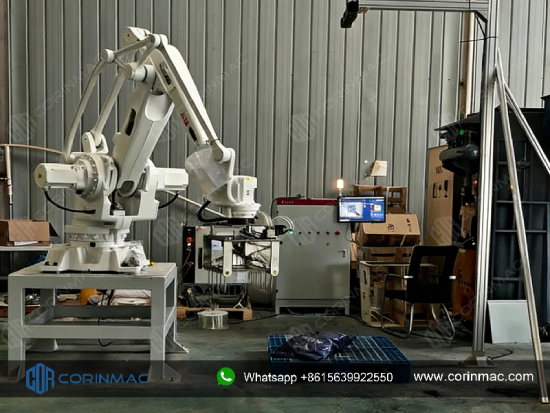 |
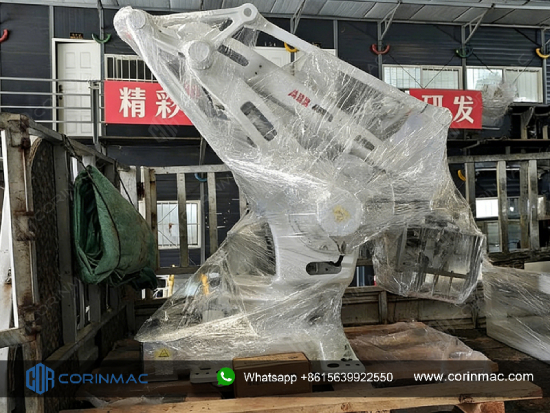 |
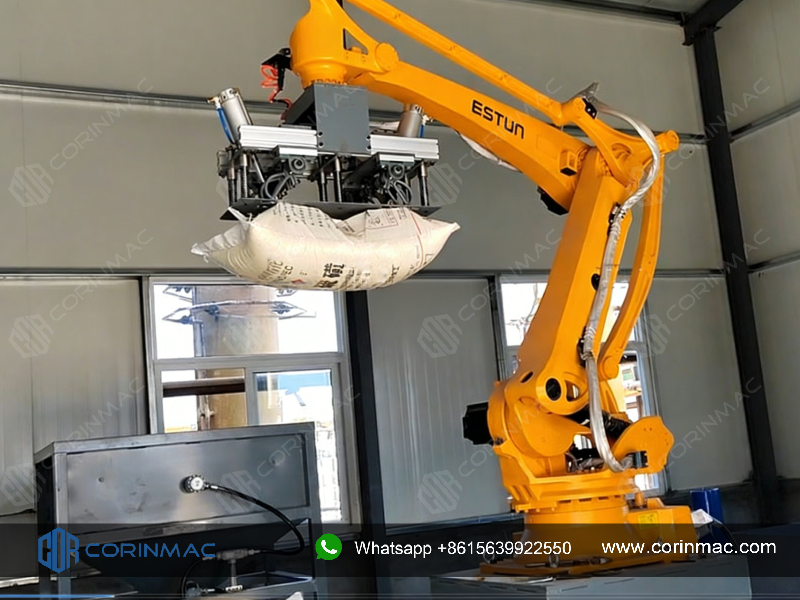
Chinese brand ESTUN robot
 |
 |
Product Details
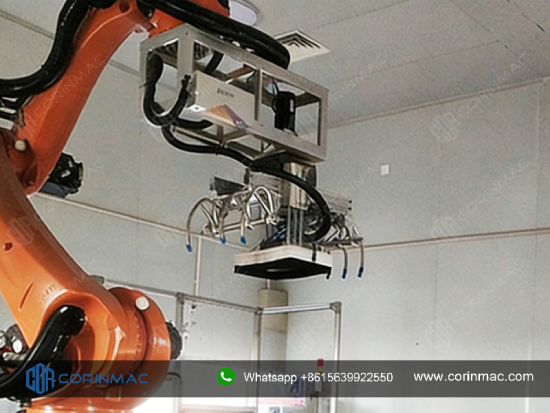
3D camera vision recognition system
 |
 |
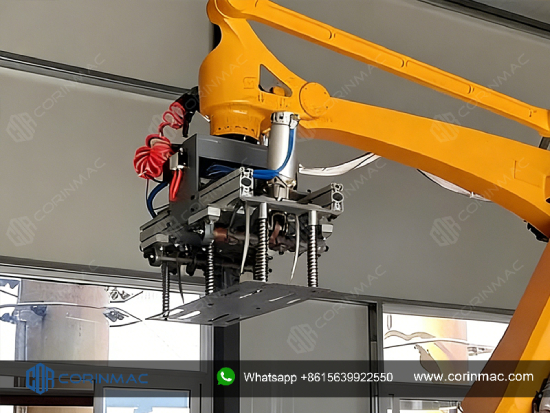
Robotic depalletizer gripper
 |
 |
Workflow
① Loading: AGV or forklift delivers stacks of bags to the robot's work area.
② Identification: A 3D vision system identifies the bag type and position.
③ Depalletizing: The robot picks up individual bags and delivers them to the unpacking machine.
④ Bag Breaking: A high-speed blade cuts open the bottom of the bag, allowing the material to fall into the screening system
⑤ Separation: Drum screen separates the material from the remaining bags.
⑥ Feeding: The material is fed into the target equipment via a screw conveyor.
⑦ Recycling: Remaining bags are compressed and packaged for automatic recycling.
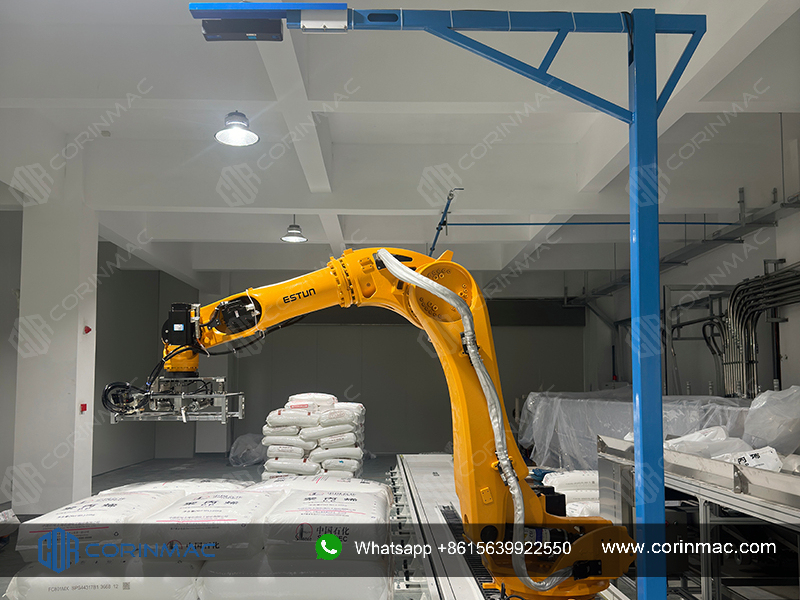
depalletizing robot
Key Advantages
High Efficiency: Capable of processing 300-600 bags per hour (adjustable).
Zero Pollution: Fully enclosed structure, dust emission concentration ≤10mg/m³, meeting environmental standards.
Labor Saving: Reduces 3-4 operating positions, saving hundreds of thousands of yuan in labor costs annually.
High Compatibility: Suitable for various packaging materials such as woven bags, PE bags, paper bags, and composite bags.
Intelligent Integration: Seamlessly integrates with MES systems and AGV logistics systems to achieve full-process automation.
 |
 |
Technical parameters
Unpacking Capacity: 400 bags/hour (25kg/bag)
Power Supply: AC380V±5%, 50Hz
Material: 316L (Pipe Wall Thickness≥3mm)
Number of Cutters: 2 sets (T8A)
Dust Collection Method: Internal Filter
Motor: 3kw
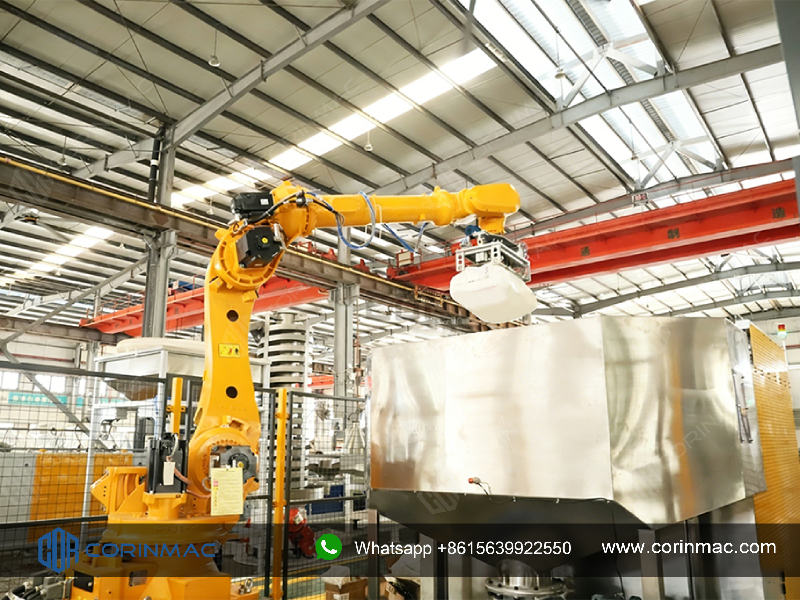
robot arm bag unpacking machine


robot arm bag unpacking machine
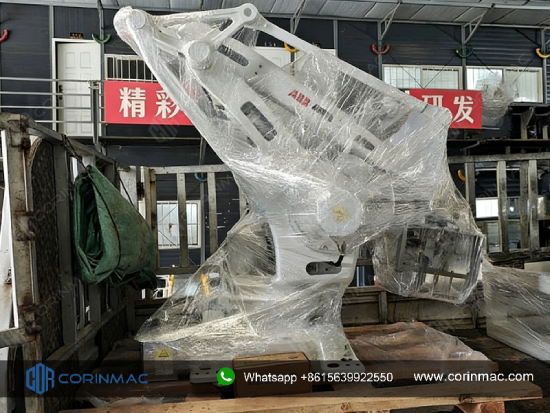
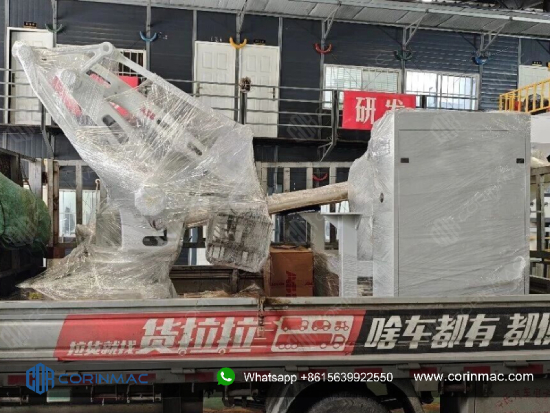
Packaging for shipment
 |
 |
Application
Company Profile
CORINMAC-Cooperation& Win-Win, this is the origin of our team name.
This is also our operating principle: through teamwork and cooperation with customers, create value for individuals and customers, and then realize the value of our company.
Since its founding in 2006, CORINMAC has been a pragmatic and efficient company. We are committed to finding the best solutions for our customers by providing high-quality equipment and high-level production lines to help customers achieve growth and breakthroughs, because we deeply understand that customer's success is our success!
Customer visits
Welcome to CORINMAC. CORINMAC's professional team offers you comprehensive services. No matter which country you come from, we can provide you with the most considerate support. We have extensive experience in dry mortar manufacturing plants. We will share our experience with our customers and help them start their own business and make money. We thank our customers for their trust and support!
Customer feedback
Our products have won a good reputation and recognition in more than 40 countries, including the United States, Russia, Kazakhstan, Kyrgyzstan, Uzbekistan, Turkmenistan, Mongolia, Vietnam, Malaysia, Saudi Arabia, the United Arab Emirates, Qatar, Peru, Chile, Kenya, Libya, Guinea, Tunisia, etc.